We all have those “comfort authors”—the big names that dominate the endcaps at the airport or the front page of Amazon. But some of the most daring, original, and soul-stirring writing is happening in the trenches of independent publishing. Here at The Book Collective, we believe in the power of the “hidden gem,” and we want to challenge you to step outside the mainstream for just one book a month.
The 2026 Collective Challenge is simple: Can you read 12 indie books this year? That’s one story every thirty days that was born from the pure grit and passion of an independent creator. Whether it’s a self-published thriller from a local author or a speculative novella from a small press, these are the stories that define the future of fiction.
Why Take the Challenge?
Support the Creators Directly: When you buy an indie book, you aren’t just a number in a massive corporate algorithm. You are directly fueling an author’s ability to keep writing.
Discover “The Next Big Thing”: Indie authors like Morrigan King and Audrée Laveau are taking risks that traditional publishing often waits years to catch up on. You get to be the one who saw it first.
Unfiltered Storytelling: Without a corporate boardroom smoothing out the “edges,” indie books are often raw, experimental, and incredibly honest.
Diversify Your Shelf: Indie publishing is the home of unique voices, niche genres (like “Menopausal Superheroes” or “Sky-City Vipers”), and perspectives that deserve to be heard.
How to Participate
Commit to One a Month: Don’t overcomplicate it. Just pick one title each month that isn’t from the “Big Five” publishers.
Share Your Progress: Use the hashtag #TheCollective12 on social media. Post a photo of your current indie read next to your morning coffee or your favorite reading nook.
Leave a Review: This is the “secret sauce” of the indie world. A single review on Amazon or Goodreads is worth more to an indie author than a thousand-dollar ad campaign.
Join the Discussion: Every month, we’ll be highlighting a “Collective Choice” right here on the blog to help you fill your slot!
Are You In?
Twelve books. Twelve independent voices. One year of incredible discovery. This isn’t just a reading goal; it’s a movement to reclaim the “human” element of storytelling. We know the madness of the TBR pile is real, but there is always room for a story that was written from the heart, for the heart.
Are you ready to take the #TheCollective12 challenge? Let us know in the comments “I’M IN!” and tell us the first indie book you’re planning to devour this month!
Have you ever wondered why you reach for a spine-chilling slasher while your best friend won’t touch anything that doesn’t have a “Happily Ever After”? Or why some people find comfort in the complex politics of a Sky City while others prefer the grounded grit of a cold case mystery? Our bookshelves are more than just a collection of stories—they are a mirror of our inner worlds.
Psychologists have long studied the link between personality traits and media preferences. Whether you’re a “high-sensation seeker” or someone who craves emotional resolution, your favorite genre reveals a lot about how you navigate the real world. Let’s pull back the curtain on the psychology of your TBR pile.
The Profile Breakdown
The Horror & Thriller Fan: If you live for the “Watcher” in the shadows or a “Seven Days” countdown, you likely score high in Openness to Experience. You aren’t afraid of intense emotions and might actually use controlled fear as a way to manage real-life anxiety. You’re a problem-solver who likes to stay three steps ahead of the villain.
The Fantasy & Sci-Fi Explorer: Fans of Dragon Riders, Mermaids, and Vesper’s magic often possess a high level of imagination and empathy. You aren’t just looking for an escape; you’re looking for a better way to understand our own world by viewing it through a different lens. You value innovation and aren’t afraid to “think outside the atmosphere.”
The Romance & Family Saga Reader: If you’re here for the “Enemies-to-Lovers” or a multi-generational legacy, you likely value social harmony and emotional intelligence. You are a “people person” who finds deep meaning in the nuances of relationships, and you believe in the power of redemption and growth.
The Mystery & Noir Detective: If you’re obsessed with cold cases and gritty detectives, you are likely highly analytical and observant. You have a strong sense of justice and a “need for closure.” You don’t just read a book; you participate in it, looking for the clues that everyone else missed.
The Poetry & Literary Fiction Soul: You are likely highly introspective and comfortable with ambiguity. You don’t need a tidy ending; you want a beautiful sentence that makes you feel seen. You value depth over speed and aren’t afraid to sit with the “big questions” of life.
Are You a “Genre-Bender”?
Of course, most of us don’t fit into just one box. If your library is a chaotic mix of “High Priestesses” and “Dark Roast Coffee” pairings, it means you’re a versatile thinker who craves variety. You might read horror when you need an adrenaline boost and romance when you need a mental hug. That balance is what makes a reader truly “Magnificent.”
Does your profile match your personality? Or are you a total sweetheart who secretly reads the most twisted slashers imaginable? Let us know your “Primary Genre” in the comments!
We all have those “blockbuster” authors whose new releases take over every billboard and bestseller list, but some of the most transformative, heart-pounding, and soul-stirring stories are currently tucked away in the quiet corners of the indie world. These are the “hidden gems”—the writers who are self-publishing, building their own collectives, and taking massive creative risks that traditional publishing often shies away from. Today, we’re polishing off the dust and shining a spotlight on the independent voices that deserve a permanent home on your bookshelf.
Whether you’re looking for a new perspective on ancient myths or a thriller that feels like it was written just for you, these are the authors you’ll be bragging about “discovering” long before they go mainstream.
Maverick Montgomery
Maverick Montgomery lives in the Midwest with his wife of nine years and their three partners-in-crime, his two dogs, Austen and Ava, and cat, Jude. Considered a self-proclaimed gamer nerd who was holding a game controller long before he picked up a pen. a gear head at heart who can’t resist drooling over any vehicle whether it be classic or modern, Maverick grew up immersed in classic Alfred Hitchcock films, fueling his lifelong fascination with suspense and crime thrillers.
When he’s not writing, Maverick can be found tinkering with cars or dreaming of his next project, usually no more five in his mind at once or he can be hiding out in his man cave surrounded by comic books, stacks of video games, and story ideas waiting to be unleashed. Equal parts snark and grit, he pulls his inspiration from Dick Tracy and Punisher comics, or indulging his wife’s latest project antics while figuring out ways to avoid admitting she’s right.
Timothy King
Timothy King is an adult horror author who enjoys delving into the complexities of human nature. When he is not writing spine-chilling tales, he is spending time with his wife and kids in beautiful Tampa, Florida.
James Kaine
James Kaine is a bestselling author, publisher and filmmaker born and raised in Trenton, NJ. An active pro member of the Horror Writer’s Association, he brings readers visceral, haunting tales of terror via his Horror House Publishing imprint.
Ted Tally, Academy Award-winning screenwriter of The Silence of the Lambs and Red Dragon, called his book My Pet Werewolf “Twisty. Spooky. Shocking.” and “Unputdownable.”
BookLife by Publishers Weekly proclaimed his novel, The Dead Children’s Playground, “will chill readers to the bone.” The book, the first in his American Horrors anthology series, has been a #1 bestseller in U.S. Horror on Amazon and was the winner of the 2025 Books of Horror Indie Brawl. His works are being translated into multiple languages, bringing James’s cinematic style of scary storytelling to a global audience.
He resides in Hamilton, NJ with his wife, Jessica, their two children and an energetic Boston Terrier. When he isn’t writing he loves to read, travel, cook, watch movies and learn new skills.
Who Is Your Best-Kept Secret?
The beauty of the indie community is that it thrives on word-of-mouth. When you buy an indie book, you aren’t just adding to a corporate bottom line; you’re directly supporting a writer’s dream and helping an underrepresented voice reach the ears of someone who needs to hear it. Every review you leave and every “you have to read this” you whisper to a friend is a lifeline for these incredible creators.
Who is an indie author you absolutely adore that more people need to know about? Drop their name (and your favorite book of theirs!) in the comments below so we can all go show them some love!
We’ve all been there: a Kindle library that’s 400 titles deep, a “Want to Read” list on Goodreads that spans decades, and a desktop folder simply titled “To Read” that is currently slowing down your computer. Spring isn’t just for clearing out your closet or scrubbing the baseboards—it’s the perfect time to declutter your digital bookshelves so you can actually find the stories you’re dying to read.
If your e-reader is looking a little like a digital junk drawer, here are five ways to sweep out the cobwebs and make room for your March Madness haul.
1. The “Collections” Deep Clean
Most e-readers allow you to create custom collections. Instead of just “Fiction” or “Non-Fiction,” try organizing by mood or “Vibe.”
The Dark Room: For your Audrée Laveau-style horror and psychological thrillers.
The Hero’s Journey: For your Samantha J. Bryant superhero adventures and high-flying Sci-Fi.
Quick Bites: For those 30-minute short stories and novellas you can finish on a lunch break.
2. The “3-Chapter” Rule
Be ruthless. If you started a book three years ago and haven’t made it past chapter three, it’s time to move it to a “DNF” (Did Not Finish) folder or Archive it. Life is too short and the Book Collective list is too long to spend time on stories that don’t spark your curiosity.
3. Sync Your Systems
If you use multiple platforms (Kindle, Libby, StoryGraph, or Goodreads), spend twenty minutes making sure they talk to each other. Mark the books you’ve finished, update your progress, and delete the samples of books you’ve already purchased.
4. Prioritize the “Top 5”
Choose five books—just five—that you must read this spring. Move them to a “Currently Reading” or “Up Next” collection so they are the first thing you see when you unlock your device. This stops the “infinite scroll” of indecision every time you sit down to read.
5. Backup Your Favorites
For the books that changed your life, make sure they are safely backed up. Whether it’s in the cloud or on a dedicated hard drive, protecting your digital library ensures your favorite worlds are always within reach, even if a platform goes down.
A Fresh Start for Your Shelves
There is something incredibly satisfying about a clean, organized library. It turns reading from a chore of “what should I pick?” into an effortless escape into a new world. Once you’ve cleared the digital clutter, you’ll have plenty of space for the incredible indie authors we’re featuring all month long.
How do you organize your digital books? Are you a “Folders for Everything” person or a “Total Chaos” scroller? Share your tips (or your struggles) in the comments!
With so many incredible titles dropping this month, your TBR pile is officially under siege. Are you sticking with your favorite genre, or is this the month you finally branch out into something new—perhaps some haunting poetry or a high-stakes space opera?
With so many incredible titles dropping this month, your TBR pile is officially under siege. Are you sticking with your favorite genre, or is this the month you finally branch out into something new—perhaps some haunting poetry or a high-stakes space opera?
This Story Might Save Your Life
Benny Abbott and Joy Moore host one of the most beloved podcasts in the world. Each week, they delight listeners with a different “against all odds” survival story, gleefully finding the weird, life-affirming humor in near-death experiences. Since their first episode on Joy’s experience with severe narcolepsy, they’ve been the best friends everyone wants to befriend—and thanks to the meticulous management of Joy’s husband, Xander, they’ve built a lucrative empire.
The problem is, their next survival story may be their own. When Benny arrives at Joy and Xander’s one morning to record, he finds shattered glass and an empty house. The one clue shedding light on the couple’s disappearance is the incomplete, previously unseen first draft of Joy’s memoir. Benny will stop at nothing to find them, even as the police zero in on him as their prime suspect.
Millions of devoted listeners think they know the “real” Benny and Joy. But as the hours tick by, and the odds seem increasingly stacked against Joy and Xander being found alive, not even the most devoted fans could guess the terrible secrets their favorite famous BFFs have hidden from the world—and from each other.
No Matter What
Sometimes love sends you back to the drawing board.
After a traumatic accident threatens the foundations of their happy marriage, a couple tries to rebuild and find their way back to each other—and themselves—in this tender, slow-burn romance.
Roz and Vin can’t look each other in the eyes anymore, let alone share a bed. It’s been a year since they survived a life-altering accident, and their marriage hasn’t been the same. But Roz has held out hope that they can fix things, until she discovers Vin has signed a new lease. So she does what any soon-to-be-divorced Manhattanite would do: sign up for a figure-drawing class.
Between Roz’s determined attempts to improve her artistic skills and her adventures with her best friend, Raffi, she can almost ignore Vin’s impending move-out date and his footsteps in their previously unoccupied guest room. But it would all be a lot easier if Vin wasn’t Raffi’s older brother, and if she didn’t still find him incredibly, debilitatingly attractive and kind.
So kind, in fact, that Vin offers to let Roz draw him. What is she supposed to say? It’s probably better than her original plan of finding some random male model online, and she needs all the practice she can get. Plus, that’s sure to make a separation easier, right? Focus on every detail of your estranged spouse’s body while drawing him in the nude? But after the year they’ve spent avoiding each other, it feels good to see and be seen by one another again.
As Roz works to capture the wholeness of the person she fell in love with, will they both be able to draw upon the feelings they buried deep inside to finally heal together?
The Bookstore Diaries: A Novel of Secrets, Drama and Second Chance Love
This summer, the town’s juiciest secrets are revealed in New York Times bestselling author Susan Mallery’s joyful and sparkling new novel
Jax has a slight issue with control—as in, she needs it. Always. Too bad she has power only over the Painted Lady Bookstore, the Victorian mansion turned bookshop she inherited. No one else listens to a word she says. Her ex gets engaged for questionable reasons. Her beloved sister, Ryleigh, wants to move away to find a husband. And the handsome contractor Jax has chosen to convince Ryleigh to stay is only interested in Jax.
Still, she’s living the bookworm dream—until an unhappy accident erases the names from the bookshop lockboxes where the town keeps their diaries. Which means the only way to find a diary’s owner is…to read it.
As secrets spill and scandals surface, life at the Painted Lady Bookstore gets a lot more colorful and chaotic. But for a woman who’s always had to take charge, Jax will see that losing control—especially with the right wrong guy—can set you free.
Want to Know a Secret?
Everyone has secrets.
YouTube baking sensation April Masterson knows the secret to the perfect gooey brownies. Or how to make key lime squares that will melt in your mouth. But if you keep watching her offline, you may find out some other secrets about April. Secrets she’d rather you didn’t know.
Like where did her son go when he snuck out of the house? What was she doing with the local soccer coach behind fogged windows? And what’s buried in her backyard?
Everyone has secrets. Some are worse than others. April’s secrets are enough to destroy her.
I’ll make sure of that.
A Far-flung Life: A Novel
When we do something that can’t be undone or mended, how do we go on living? How do we find our North Star when there is no right answer? These are the questions at the center of M. L. Stedman’s unforgettable and magisterial new novel, A Far-flung Life. From the author of the beloved and bestselling The Light Between Oceans, this is a sweeping and epic story of a family, a tragedy, and the aftermath that reverberates for decades.
Remote Western Australia, 1958: here, for generations, the MacBrides have lived on a vast sheep station, Meredith Downs. It is a million acres, an ocean of arid land. On an ordinary day, on a lonely road, under the unending blue sky, patriarch Phil MacBride swerves to avoid a kangaroo. In seconds the lives of the entire MacBride family are shattered. And then, tragedy revisits when a twist of consequences claims the life of one sibling, and leads another to give up everything for the sake of an innocent child. Matt, the youngest MacBride, is plunged into a moral and emotional journey for which there is no map, no guide. The secrets at the heart of this gutting and beautiful story force him to choose between love and duty, sacrifice and happiness.
A Far-flung Life is a tale about family and belonging, fate and time. It is about people trying to do their best, and each, for private reasons, seeking shelter from the storm of life.
Can a fleeting moment unravel a whole life, mar it indelibly and irrevocably? Can compassion, resilience and forgiveness allow us to come to terms with our human imperfections? These are the questions Stedman asks in A Far-flung Life, her profoundly moving, uplifting, and luminous new novel about what the heart can endure for the sake of love.
Felicia’s Favorites: A Novel
After the unexpected death of their mother, Felicia Morgan Weston, her five daughters are summoned to a historic Connecticut farmhouse for the reading of her will. Still reeling from shock, they hear revelations that will potentially change their lives—and they realize there was much more to their mother than they ever knew.
Charlotte, the oldest, always resented her mother’s advice, but now misses her terribly. An entrepreneur and single mother, she doesn’t dare hope for a second chance at love.
Although content with her career as a TV producer and her life with her partner in Greenwich Village, Quinne is about to have an opportunity to dream bigger.
Former ballet dancer Olivia has lived as a paraplegic since a car accident twelve years ago. Refusing to be a burden, she has denied herself the love of her life.
Despite her mother’s disapproval, Veronica resigned herself to a secret relationship with an ambitious married senator.
Happily married mother of three Isabelle has just found out that her husband is having an affair with his much younger intern.
Each sister is about to receive a gift beyond her wildest dreams from their very private but loving mother, who considered all her girls her favorites. Danielle Steel’s new novel is a moving testament to the power of a mother’s love and the importance of fully embracing life.
The Story of Stories: The Million-Year History of a Uniquely Human Art
An irresistible and enchanting journey through human history—from mankind’s earliest fires to the latest smart phones—that tells the surprising and untold story of storytelling.
Joan Didion told us, “We tell ourselves stories in order to live.” And yet, the story of stories has never been told until now. MIT technology pioneer Kevin Ashton was at the forefront of the digital revolution that led to the invention of the smartphone, the ultimate storytelling device. This latest technology in the long arc of human storytelling allows anyone, for the first time in history, to tell stories to everyone. In The Story of Stories, Ashton tells the untold story of storytelling. The result is an eye-opening, compelling journey through the eight great revolutions of storytelling, all of which follow a simple each major new storytelling tool increases the number of people who can share stories and the number of people with whom those stories can be shared.
Our first night-fires created the earliest audiences for spoken stories. Language did not lead us to stories; stories led us to language. In time, the development of rhyme, song, and other mnemonic devices allowed those spoken stories to be preserved for generations; pictures drawn on cave walls turned preservation into permanence, telling stories we still experience thousands of years later; writing enabled storytellers to spread tales to faraway places; the Chinese invented printing with moveable metal type around 700 CE; the Toltecs independently invented it at about the same time; 750 years later Gutenberg independently invented it again, adding a converted wine press to create the mass production of mass communication. Over time, printing presses increased the number of storytellers and the size of their audiences by many orders of magnitude, a trend which led us to great revolutions, and electric, then electronic, then digital storytelling and all our storytelling tools of today—and tomorrow’s.
In this remarkable book, more than twenty-five years in the making, Ashton looks at the development of human storytelling to help us understand where we are in the latest iteration that is the digital era. Drawing on examples from art, literature, music, and pop culture, from the Bible to Bon Jovi, Aristotle to Artificial Intelligence, Frederick Douglass to Facebook, and cave paintings to cinema, The Story of Stories is a passionate and crucial exploration of how stories and the tools we use to tell them continue to change us, cause revolutions, and connect us to each other and give our lives meaning.
To Cage a Wild Bird
Enter the brutal world of Endlock, a prison where the wealthy hunt the inmates for sport. The first novel in an electrifying dystopian romance series, this high-octane debut about forbidden love, found family, and a fight for survival will leave you breathless.
In the city of Dividium, the law is simple: commit a crime, and your punishment is a life sentence in Endlock.
Raven Thorne is Dividium’s most notorious bounty hunter, living on the edge of society. But when her younger brother, Jed, is sentenced to Endlock, Raven will do anything to save him—even if it means getting herself arrested.
Now trapped in a prison where danger lurks around every corner, Raven must use all her cunning and strength to protect Jed—and herself if she is to complete her perilous mission. But there’s one obstacle she never expected: the prison guard who stirs something deep inside her. The man she should hate. The man whose true motives seem impossible to pin down.
In a world where trust is a weapon and love is a liability, Raven must decide if she will risk everything to tear down a vicious system.
Across the Vanishing Sky
He spent a lifetime trying to escape his dark past…but to save her, he’ll wade back into the shadows.
Braedyn Winslow never expected to return to Starlight Grove—the town that took everything from her. Not after her best friend, the one who’d sacrificed so much for her, vanished without a trace. But with a young son to raise and a past that won’t stay buried, Brae is back…and determined to uncover the truth.
She just didn’t count on the brooding, reclusive mountain man living next door.
Dex Archer is the stuff of local legend—silent, rugged, and surrounded by whispers of his and his brothers’ violent father. But Brae sees through the scowl and his parentage to the man beneath: fiercely loyal, unexpectedly kind…and just dangerous enough to protect her when someone starts warning her off her search.
The closer she gets to the truth, the harder it is to stay away from Dex. And as things get more perilous, Brae realizes the only person she can rely on is the one man who swore never to trust again.
Only someone isn’t happy that Brae has been digging, and they’ll do anything to stop her. But Dex? He’ll do anything to save her, even slip back into the dark…
If We Never End
Sylvie Castellano is used to goodbyes. Every summer, her friends leave to vacation at faraway beaches and her parents jet off to work on a luxury yacht, dumping her with her tia Vivian. Sylvie may love her aunt Viv, but just once, she wishes the summer held a big adventure for her, too.
When Sylvie scores the thrift find of a lifetime-a vintage gold watch worth thousands-she thinks maybe her luck is turning around. Then a turn of the watch’s dial summons a ghost boy. With no idea who he is or why he’s attached to the watch, and only his name to go off of-Penn-Sylvie offers to help him unravel the mystery of his death.
Sylvie’s summer is suddenly full of road trips, beach bonfires, and ferris wheel rides as she and Penn try to piece together the life he lost. But soon, Sylvie begins to imagine a future together-a future they can never have. Then a devastating discovery brings everything crashing down. The watch’s secrets extend far beyond Penn, and it’s not only Sylvie’s heart at risk, but her life.
Drop a comment below and tell us which March release you’ve been counting down the days for! Don’t forget to tag us in your “book haul” photos so we can geek out over your new reads together.
Green is the color of spring, but it’s also the color of envy, ancient forests, and the glow of strange technology. It’s the shade of a fresh start and the moss growing over a forgotten secret. To wrap up our launch day here at The Book Collective, we’re leaning into the lush, mysterious, and sometimes toxic side of the color green.
Whether you’re writing a Shifter romance, a gritty noir, or a high-stakes sci-fi, use these six prompts to add a splash of verdant energy to your draft.
The Prompts
The Emerald Key: Your character finds an antique key made of solid emerald. It doesn’t fit into a door, but when they hold it up to a stone wall, a glowing green door appears that only they can see.
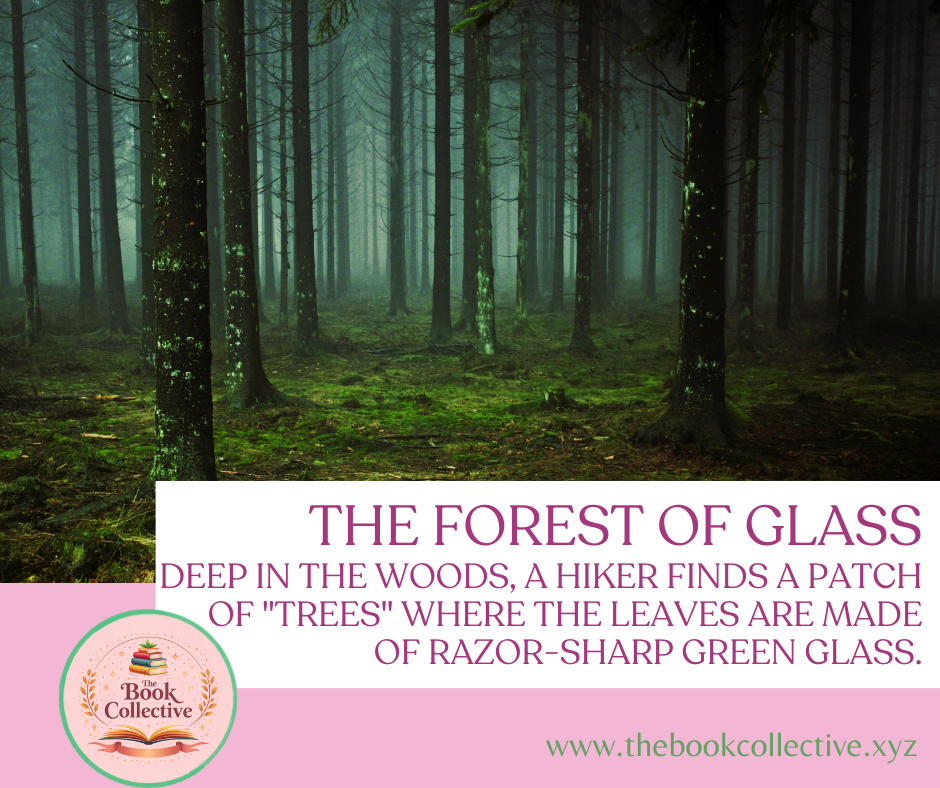
The Forest of Glass: Deep in the woods, a hiker finds a patch of “trees” where the leaves are made of razor-sharp green glass. The wind through the branches doesn’t rustle; it chimes like a warning.
The Poisoned Ivy: A character moves into a restored home on Sunset Avenue, only to find that the ivy growing on the exterior changes shade based on their mood—and it’s currently a violent, neon green.
The Jade Eyes: Every member of a secret royal bloodline is born with striking jade-green eyes. Your protagonist, a commoner, wakes up one morning and realizes their brown eyes have completely changed color.
The Bio-Luminescent Trail: In the high-altitude city of Celestia, a Viper discovers a trail of glowing green liquid leading from a secure lab directly to their own living quarters.
The Moss Memory: An ancient, moss-covered statue in a Scottish garden begins to “speak” to anyone who touches it, but it only shares memories of a treasonous act committed 500 years ago.
Plant Your Ideas
Green is more than just a color; it’s a vibe. It can represent the healing power of nature or the eerie glow of something supernatural.
Which of these “Green” prompts is going to grow into your next favorite scene? Share your thoughts in the comments below!
Flowers are often seen as symbols of beauty and romance, but in the world of storytelling, they can be so much more. From the toxic allure of a hemlock sprig to the persistent hope of a dandelion in concrete, these twelve prompts explore the delicate and dangerous side of the floral world.
Whether you’re writing a dark fantasy, a cozy mystery, or a high-stakes thriller, let these blooms inspire your next scene.
The Prompts
The Wilted Warning: Every time your protagonist lies, the bouquet on their dining table wilts instantly. They just received a promotion—and the roses turned to ash.
The Deadly Arrangement: A professional florist is hired to create a “silent” bouquet for a high-profile funeral. The flowers chosen are all historically used as poisons, but only the florist and the killer know why.
The Iron Rose: In a world of high-tech metal cities like Celestia, a character finds a single, organic rose growing in a ventilation shaft. It’s the first living thing they’ve seen in a decade.
The Memory Lily: Drinking tea brewed from a specific white lily allows a person to relive their happiest memory—but for every hour spent in the past, they lose a day of their future.
The Lavender Sleep: A village is plagued by a strange sleeping sickness. The only common thread? Every victim fell asleep while the scent of wild lavender was unnaturally heavy in the air.
The Thistle Guard: A Scottish gentleman in the Highlands protects his property with a “living fence” of enchanted thistles that only allow those with royal blood to pass through unharmed.
The Poppy Path: A character follows a trail of bright red poppies through a dark forest, only to realize the flowers aren’t growing from the ground—they are growing from the footsteps of someone who passed by hours ago.
The Sunflower Watcher: A row of sunflowers in a neighbor’s yard doesn’t follow the sun; they follow your protagonist as they move from room to room inside their house.
The Orchid Secret: An ultra-rare orchid is found at a crime scene. When it blooms, the patterns on the petals form the exact coordinates of a hidden location in the sky.
The Snapdragon Snap: In a whimsical fantasy world, Snapdragons are literal. If you don’t feed them a drop of honey every morning, they’ll bark at intruders and alert the city guard.
The Jasmine Vow: Two lovers plant a jasmine vine on their wedding day. Legend says as long as the vine lives, their bond is unbreakable. One morning, the vine is found severed, but both are still alive.
The Dandelion Wish: A character finds a “clock” dandelion. When they blow the seeds into the wind, the seeds don’t float away—they freeze in mid-air, forming a map of the city’s underground tunnels.
Which Bloom Speaks to You?
Flowers have a language all their own (floriography), and sometimes that language is a whisper of danger or a shout of joy.
Which of these prompts is going to make it into your notebook today? Let us know in the comments!
The frost is melting, the days are stretching out, and the air finally smells like something other than woodsmoke and cold. Spring is the ultimate season of renewal, making it the perfect time to shake off the winter writer’s block and plant some new narrative seeds.
Whether you write sweeping fantasy, bone-chilling horror, or heart-tugging romance, these ten prompts are designed to get your creative gears turning.
The Prompts
The Thaw: As the snow melts in a small, isolated town, it reveals something buried in the town square that was never meant to be found—and it’s still perfectly preserved.
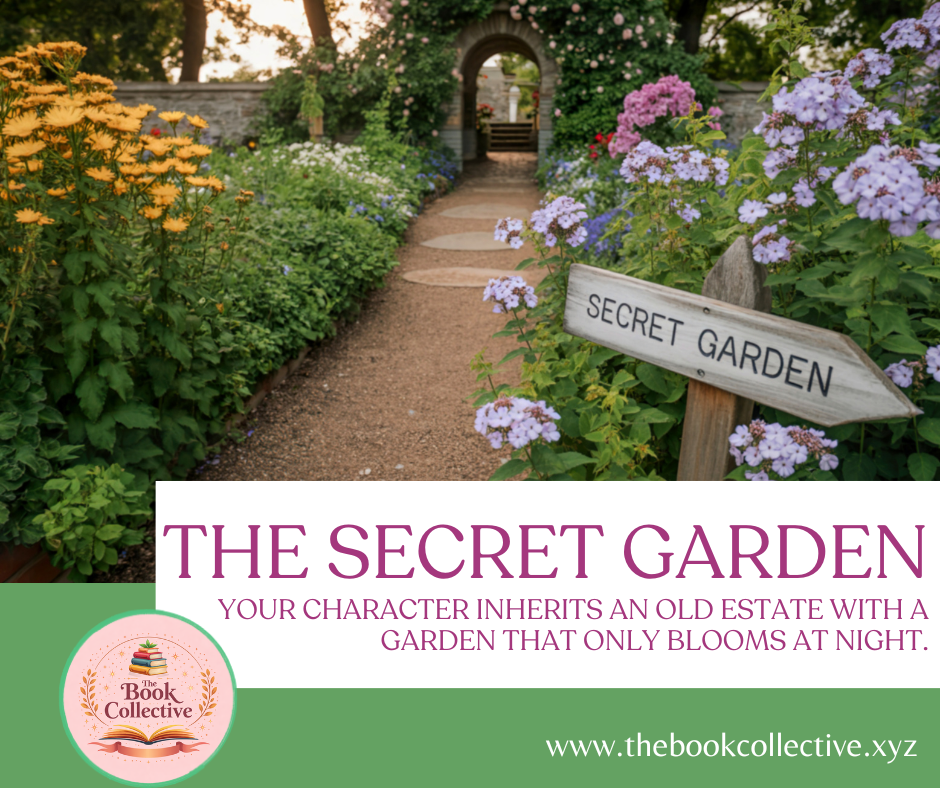
The Secret Garden: Your character inherits an old estate with a garden that only blooms at night. The catch? The flowers hum a melody that sounds exactly like a lost loved one’s voice.
The Pollen Allergy: A character develops a sudden “allergy” to spring flowers, but instead of sneezing, they start hearing the thoughts of anyone standing within ten feet of a blooming tree.
The Vernal Equinox: On the night of the spring equinox, the veil between worlds thins. A character walks through their front door and realizes they’ve stepped into the right house, but the wrong century.
The Greenhouse Effect: A scientist at a high-tech facility (think Celestia-level tech) accidentally creates a plant that grows at a rate of three feet per hour—and it seems to be hunting for a specific person.
The Rebirth: A legendary hero who died centuries ago is “reborn” from the soil of an ancient battlefield every spring, but they only have until the first day of summer to finish their unfinished business.
The Spring Cleaning: While clearing out the attic of a Victorian home on Sunset Avenue, a character finds a box of letters dated for the future—and the next letter is addressed to them, dated for tomorrow.
The First Bloom: In a world where color is a luxury you have to pay for, your character discovers a single, vibrant yellow dandelion growing in the cracks of a gray sidewalk.
The Migration: Every spring, a specific species of bird returns to a coastal town. This year, they aren’t carrying twigs for nests; they are carrying gold coins and human jewelry.
The Storm: A sudden spring thunderstorm doesn’t bring rain—it brings a heavy, glowing mist that causes everyone it touches to forget the last seven days of their lives.
How to Use These Prompts
Don’t feel pressured to write a whole novel! Use these for:
A 10-minute “Sprints” session.
A warm-up exercise before you dive back into your main Work-in-Progress.
A short story entry for a community contest.
Which prompt sparked an idea for you? Tag us on social media or share a snippet of your response in the comments below!
We’ve all been there. You have a killer opening scene, a character who won’t stop talking in your head, and a premise that feels like lightning in a bottle. You start typing, the words are flying, and then… you hit The Wall.
For many of us, the word “outline” feels like a cage. We’re Pantsers (writing by the seat of our pants) because we want the story to surprise us. But even the most dedicated “discovery writer” needs a compass to navigate the messy middle and reach the finish line.
If you’re struggling to turn that brilliant spark into a finished manuscript, here are 6 tools to help you “plot” without losing your pants.
1. The “Headlight” Method
You don’t need to know the destination to start the car; you just need to see the next fifty feet. Instead of a full outline, write down the next three things that need to happen. Once you reach the third one, stop and brainstorm the next three. It keeps the momentum alive without the pressure of a 40-page roadmap.
2. Character Goalposts
If you aren’t sure where the plot goes, ask: “What does my character want right now?” and “Who is stopping them?” Every scene should move your character closer to or further away from their goal. As long as they are chasing something, the story is moving.
3. Reverse Engineering the Ending
Sometimes the easiest way to find your way is to look backward. If you know how the story ends (even vaguely), ask yourself: What is the one thing that HAD to happen right before this? Keep asking that until you reconnect with where you are currently stuck.
4. The “What If” Spiral
When the plot feels stale, throw a grenade into the scene. Ask:
What if a secret is revealed right now?
What if the floor literally gives way?
What if the person they trust most walks through the door? Pantsing thrives on chaos—don’t be afraid to create some.
5. Sensory Anchors
Stuck in a boring transition? Focus on a single sensory detail. The smell of old parchment, the way the light hits a dusty rose-colored chair, or the distant sound of a clock ticking. Often, grounding a character in their physical world will reveal a new path for them to take.
6. The “Placeholder” Strategy
If you hit a scene that requires heavy research or a complex bridge you aren’t ready for, don’t stop. Type [THEY FIGHT AND SOMEHOW ESCAPE TO THE WOODS] in bold and keep going to the next part you are excited to write. You can’t edit a blank page, so keep the “Forward” button held down at all costs.
At the end of the day, being a “Pantser” isn’t about a lack of discipline—it’s about a surplus of curiosity. You’re writing to find out what happens next, and that’s a powerful engine. Use these tools to keep that curiosity alive when the path gets dark, and remember that every great novel started as a messy first draft that someone simply refused to give up on.
Are you a Plotter, a Pantser, or a “Plantsie” (a bit of both)? Drop a comment below and let us know which tool you’re going to try on your current work-in-progress!